Total Pageviews

Saturday, 6 February 2016

UF Study Analyzes Negative Attitudes Toward Pit Bulls

By 
Milo, a 3-year-old pit bull rescued from a dog fight bust, was adopted by Hayley Reiter and her boyfriend about 8 months ago from the rescue organization Plenty of Pit Bulls. Reiter had such a positive adoption experience that she is now a volunteer with the organization. Photo courtesy of Hayley Reiter.
Milo, a 3-year-old pit bull rescued from a dog fight bust, was adopted by Hayley Reiter and her boyfriend about 8 months ago from the rescue organization Plenty of Pit Bulls. Reiter had such a positive adoption experience that she is now a volunteer with the organization. (Photo courtesy of Hayley Reiter.)
When Hayley Reiter and her boyfriend went to the pet store to pick up cat litter, they did not know they would also make a decision that would change their lives – and the life of one lucky dog.
“My boyfriend turned and looked at Milo and said ‘that’s our dog’,” she said.
Milo is one of 26 pit bulls that were rescued from a fighting ring in Apopka and found physically mistreated and malnourished, Reiter, 21, said.
He was adopted from Plenty of Pit Bulls, a Gainesville organization that advocates for pit bull adoptions, during a pet adoption day at a pet store. He has since returned to a healthy weight and has even befriended Reiter’s cat.
But not all pit bulls have the same fate.
For decades, pit bulls have been stigmatized as aggressive dogs and are subject to breed specific legislation, said Julie K. Levy, a University of Florida veterinary professor.
A new UF study published last month, conducted by Levy, tested animal shelter staff’s accuracy in correctly identifying dog breeds to examine how these factors affect the adoption rate of pit bulls, Levy said.
“It was no surprise that they were bad at it when compared to the DNA testing,” she said, “but they also didn’t agree with each other.”
According to Levy, the research team picked four animal shelters in Florida as well as 30 dogs from each shelter and four people from each shelter, one of which was a veterinarian. Each of the 120 dogs was photographed and the pictures were shown to the 16 people, who were asked to guess what he or she thought each dog’s breed was.
The research team then conducted DNA testing on each of the animals and matched the results with the guesses. Before guessing the dogs’ breeds, each person was asked to look at the dog and simply answer if it was one of the pit bull breeds or not.
The study, made possible by Maddie’s Shelter Medicine Program through the UF College of Veterinary Medicine, showed that respondents incorrectly identified a prominent breed in a shelter dog 73 percent of the time. Levy used the term “prominent breed” to refer to the breed that was most present in mixed-breed dogs.
Pit bull-type breeds were defined in the study as American pit bull terrier, American Staffordshire terrier, Staffordshire bull terrier, pit bull and their various mixes.
“People might take pit bulls home not knowing because it doesn’t look like one, and by the same token just because a dog looks like a pit bull doesn’t mean it is,” she said.
She said the study was motivated by the disadvantage pit bulls face when it comes to adoption, as a result of policies or legislation.
“If there is a rental property that doesn’t allow pit bulls, or house insurance says you can’t have pit bulls but people can’t identify them reliably then the whole system is erroneous,” Levy said.
In Florida, a 1989 law prohibits pit bull ownership in Miami-Dade County. Pit bull owners can be subjected to a $500 fine and court action will force the removal of the animal from the county.
As part of a bigger umbrella study, Levy said the pictures of the dogs from the study were posted online and dog experts across the country were invited to guess the dogs’ breeds.
More than 5,000 people participated, and more than 70 percent of the time, only 15 percent of the dogs were correctly identified.
Levy has been researching animal welfare issues for two decades and said pit bulls are often bred to the point of overpopulation.
Levy referenced a different study and added that when it comes to dog attacks, media outlets are less likely to mention the breed if the dog isn’t a pit bull. She also said that when the media identifies dogs as pit bulls, often later investigations will show that they are not.
“We are hoping to teach the public that they are just dogs and we should assess them individually rather than trying to stereotype them as a group,” she said. “There are some pit bulls that are poorly behaved. There are some nice pit bulls, but that is true for all breeds.”
Bayley O’Donnell, a veterinary technician at the Alachua County Human Society, (ACHS) said dogs have been returned to the Humane Society because of breed restrictions.
In one instance, she said a man returned a dog because his apartment complex has a policy prohibiting pit bulls and staff at the complex thought the dog looked like a pit bull, even though ACHS lists the dog as a boxer breed.
ACHS has included a line in its adoption papers that reads, “ACHS makes no guarantee as to its breed,” referring to its animals.
However, there are local groups, like Plenty of Pit Bulls, that advocate pit bull adoptions.
Hayley Reiter adopted Milo from Plenty of Pit Bulls about eight months ago. She said she had such a positive experience with the adoption process that she decided to become a volunteer for the organization.
She mentioned that one of the pit bulls that were rescued alongside Milo in the fight bust went on to be a therapy dog.
“How sweet my dog is made me want to advocate for these dogs who have such a bad rap through the media,” she said. “It made me want to show people how kindhearted they can be even after a situation of serious neglect and abuse.”

Pit Bull "Statistics"


(Photo)
Human beings torture, maim and kill these dogs in staggering numbers yet too many ignore this fact because it is "only a Pit Bull". For more information on Bubba, please follow this link. (Photo courtesy of Marleys Mutts) http://marleysmutts.org/about-bubba/


Statistics are a method of collecting data which is used in every aspect of our lives. Without going into the very fine details of the two categories of statistics this is a method used to either demonstrate qualities present in a very select sampling or they can also be used to predict possibilities in a broad range of subjects. The drawback of embracing statistical data is that it lacks the depth of detail required to make an educated decision and percentages can be easily manipulated to mislead.


I am active in another legislative arena which led me to meet with MODOT in 2012 on the matter of their reporting and the statistics being used to make decisions in the matter of roadway safety. Before this meeting I gathered statistics using the reported motorcycle fatalities in the State of Missouri during the October 2011 reporting period by the Missouri Highway Patrol. Bear with me because there is a canine point to be made in this observation.


In October 2011 80% of those killed in motorcycle accidents were between the ages of 45-55 supporting the statistic in which older riders are the largest group involved in fatalities. 60% of these riders were indeed Harley-Davidson riders, also supporting the state's stance that Harley-Davidson riders are the most common group being killed. Of the 100% fatality ratio being studied 40% were attributed to rider error which is almost half of the sample group. These are very sobering statistics when presented in this manner.


Now for the facts presented by the numbers including causation; this single month of percentage, statistical data represented five cases. Of these five cases, one was a 55 year old Honda ATV rider who lost control and overturned, older rider number one and rider error number one. Under the definition of a motorcycle this man should not have been included in the motorcycle statistics but who really looks at those anyway except me? 

The second case of rider error was a 22 year old on an imported sport bike too much for him to handle at his riding experience level. He lost control in bad weather and hit a bridge abutment. The remaining three Harley-Davidson riders were in fact in the 45-55 age group but all three were killed in failure to yield accidents because of drivers 22 years of age and younger.


My whole point in using this research is to demonstrate that when percentages are presented in the matter most popular with those trying to promote an agenda they cannot be relied upon for accuracy. The only way to get a true picture of any cause is by going the extra mile to find out the what, where, how, why and who is lending their numbers to the percentages.


I just received an email containing statistical data that was little more than a copy/paste from an organization who openly admits they draw their data from the media accounts of Pit Bull attacks. 

This group receives far reaching acclaim for their support of the ignorance and misinformation so passionately spread by the animal rights groups whose attitude did not change until the post 2007 years after the Michael Vick horrors were exposed. I invite you to consider the media accounts of Pit Bull attacks and what they represent.


We have a society which appears to thrive on blood lust and nothing makes an ambulance chaser sit up to take notice faster than the latest account of the monster dog from hell running amuck in our streets. Media outlets are big business so I suppose on some level they are not really to blame for what increases their following and sells advertising, except that I do blame them. 


In the matter of the American Pit Bull Terrier a promotion begun by the animal rights groups, fanned by the haters who have had limited (one in some cases) experience with this breed and those easily led down any path called fashionable by the media is having devastating results. There seems to be no end in sight as the stories continue to pour in from around the country or at least that is how it appears when the facts and numbers are not also being presented.


In May of 2013 I concluded a series with the entry Hear the Thunder. This came after six weeks of sharing stories of the local Pit Bulls in our area who are in fact a true representation of this breed. During the time this series ran there were no reports of fatalities or attacks by Pit Bulls in our area. 

I expanded the time period and that observation to include the United States using the numbers supported by the very group who is so dedicated to insuring the misinformation and fear continues. From January 1, 2013 to the conclusion of the 


Evolution/Storm series, May 18 2013, there were 12 deaths attributed to Pit Bulls across this country. Eleven of those deaths were due to direct irresponsibility by owners who knew they had problem dogs and failed to keep others safe. 


The twelfth fatality was a jogger who encountered a pack of abandoned dogs in the desert. Dogs regardless of breed will answer the feral hardwired behavior to survive. Every dog savvy person addressing dog bite prevention will make the point, prey runs. In this case we have no way of knowing what history these dogs had which led them to be dumped in the desert but the bottom line is a human being made that choice and was ultimately responsible for a human death.

If the haters and the promoters of genocide wish to present percentages which dismiss the human factor I also have one to share. 


Using only the numbers of Pit Bulls posted on the PetFinder site as there is no accurate method of presenting the actual number of Pit Bulls residing in the United States, these twelve dogs (I say twelve because in the case of the jogger the investigators admitted they could not draw a reliable conclusion as to which dog killed but she was not packed) were .0006542% of the Pit Bulls in this country. Looks a little different when you are not promoting a message of hate and death does it not?


Beware in the coming months of those who court the blind followers. They are on a mission to insure Missouri does not join the other states who have discarded the ridiculous notion a dog is responsible for its own behavior. 

As I ask you to consider reaching out to your legislators in the hopes of having laws enacted demanding our communities abandon breed prejudice in favor of responsible owner laws governing ALL breeds, these hate mongers are also reaching out in hopes of killing any move toward sanity in our laws.


What these proponents of breed hate are doing is protecting the irresponsible owner and allowing them to continue to be a menace to our communities and our pets. 

Media outlets profiting from the ignorance will never give the positive Pit Bulls, which in fact represent the majority, equal time because an old saying in mass media circles is "If it bleeds, it leads". Sadly this is truth and is witnessed in every story of carnage resulting from the irresponsible behavior of those who could care less if the Pit Bull is wiped from the face of this planet.


Do your research but demand numbers and facts not made up percentages coming from the most prejudiced, money driven outlets. We have a serious people problem in this country and that will not be solved by holding these dogs responsible. 


If the haters of this breed were to succeed in the total genocide of this breed, they would move on to the next dog ruined by the human factor until there are no dogs. The problem will not disappear by the destruction of a dog. The problem will only be solved when those blowing smoke are neutralized and we can once and for all focus on the real problem...the human at the other end of the leash (or lack of)!


WHAT IS THE DIFFERENCE BETWEEN A PIT BULL AND A BULLY BREED?


The term “bully breed” is used to refer to a large group of various breeds of dog that hail from the same root breed.Dogs that belong to a bully breed are all derived from one particular type of dog known as the Molosser. 

The Molosser is an Ancient Greek breed that was characterized by a short muzzle, large bones, a large frame and pendant shaped ears.

 Originally Molossers were bred with a range of other dogs that resulted in varied breed characteristics found today in the various bully-type breeds. These dogs were bred as guardians of both property and livestock. 

These types of owners would use their dogs in sports like bull-baiting which many believe is how the term “bully breed” came about. Unfortunately, not all owners of these dogs today utilize them for their original purpose and recognized their potential as fighting dogs.

What Breeds are Bully Breeds?


The pit bull is just one breed that is categorized under the bully breed label. All the following breeds actually make up the bully breed category:

  • Alapaha blue blood bulldog
  • Ambullneo mastiff
  • American bulldog
  • American mastiff
  • American pit bull terrier
  • American Staffordshire terrier
  • Anatolian mastiff
  • Australian bulldog
  • Bantam bulldogge
  • Banter Bulldogge
  • Belgian mastiff
  • Boston terrier
  • Boxer
  • Buldogue campeiro
  • Bull terrier
  • Bulldog
  • Bullmastiff
  • Ca de bou
  • Cane corso
  • Catahoula bulldog
  • Dogo Argentino
  • Dogue de Bordeux
  • Dorset olde tyme bulldogge
  • English bulldog
  • Fila Brasileiro
  • French bulldog
  • Great Dane
  • Mastiff
  • Miniature bull terrier
  • Neopolitan mastiff
  • Olde Boston bulldogge
  • Olde English bulldog
  • Pug
  • Pyrenean mastiff
  • Renascence bulldogge
  • Rottweiler
  • Spanish mastiff
  • Staffordshire bull terrier
  • Standard bull terrier
  • Tibetan mastiff
  • Valley bulldog
  • Victorian bulldogge
As you can see from this extensive list, the American pit bull terrier is just one of many breeds. 
In fact, more than a handful of the breeds on this list surprise even the most anti-bully breed proponents.

MIS-CHARACTERIZATION OF THE PIT BULL BREED


Looking over the list of bully breeds above many of these breeds are unknown to general dog lovers which is perhaps one reason why so many dogs are mischaracterized as pit bulls. While these breeds all share common ancestry and have common features such as the flatter shorter snout, being able to distinguish between different bully breeds is important. 

Without being able to separate one bully breed from another it is easy for pit bulls to be pinned as the “breed that bit that boy.” That is not to say that bully breeds in general are bad dogs, they just happen to be most frequently selected by bad owners. 

Did you know that currently just five percent of all of the dogs found across the United States are pit bulls? Over all there are approximately 78.2 million dogs throughout the United States, 3.91 million of those dogs are pit bulls. However, 40 percent of dogs in animal shelters are characterized as bully breeds and 20 percent of those are called pit bulls.

Misquoted Facts


The mis-characterization of all bull breeds as pit bulls is not the only area where pit bulls get the short end of the stick. 
Unfortunately as public opinion of this breed declines and the banning of bully breeds builds momentum, many more facts are turned around.

Myth: Pits Bite Harder than Other Dogs


Who hasn’t heard about the incredible amount of force exerted by the jaws of a pit bull? The amazing 1600 pounds per square inch that the pit bull is said to exert through their bite is actually just like many other breeds – around 235 pounds per square inch. 

What dog has the highest pounds per square inch bite force? The Rottweiler which measures in at 328 pounds per square inch of bite force. Even with this figure in mind though, does this mean that the Rottweiler is a dangerous breed? Not necessarily: It means that if a Rottweiler were to bite someone or something it could be capable of exerting 328 pounds per square inch of bite force.

 It does not mean that this dog will bite or that it will exert that much force with a bite. What this data could mean also is that if a dog does exert that much bite force, the resulting bite could be much more severe than a bite from a less powerful dog. And that means that bites from this type of dog are more likely to be reported than bites from smaller, less powerful dogs leading to a news reporting bias.

Pit Bulls Sure are Cute

No question these Pit puppies are adorable!

ARE PIT BULLS GOOD DOGS?


Asking the question whether pit bulls are good dogs is the same as asking whether disadvantaged children are good children. A dog’s temperament depends on a variety of factors including breeding and upbringing (much like children.)

 What we do know from statistical analysis is that86.8 percent of American pit bull terriers have passed their temperament testing according to the American Temperament Test Society, Inc. 

This is a higher number of American pit bulls to pass their testing than collies, beagles and even golden retrievers. Of 122 different canine breeds tested by the society, pit bulls ranked fourth for passing temperament testing. Pit bulls, like any other dogs, have the opportunity to be great dogs.

ARE FATAL PIT BULL ATTACKS COMMON?

Turning on the news it seems like the only dog attacks that ever make headlines are attacks by pit bulls and attacks that result in death or serious injury. Few people take the time to learn the facts behind this type of breed; they simply take what they are fed by media news outlets.

 So just how common are fatal pit bull attacks? According to research an individual is 200 times more likely to die from taking over the counter aspirin than from a fatal pit bull attack.An individual is 60 times more likely to be killed by a falling coconut than they are to be killed by a pit bull attack.

 Additionally, a person is 16 times more likely to die by drowning in a five gallon bucket of water than they are to die as the result of a fatal pit bull attack. Yet how often do you hear of people dying from taking aspirin or from drowning in a bucket of water on the news? Many pit bull and bully breed haters are colored by this media reporting bias.

What Does This Media-Driven Bias Mean For Pit Bulls?


With such a bias against the pit bull breed and select bully breeds in general, how is the pit bull breed affected? Perhaps the biggest indicator of this is by taking a look at research from animal shelters around the nation. Approximately 60 percent of all dogs that are taken to shelters are euthanized each and every year. 

As we have already mentioned, of all of the dogs in animal shelters currently around 40 percent are classified as bully breeds and 20 percent are classified as pit bulls. Only 48 percent of the nation’s shelters place these pit bulls up for adoption, another 30 percent of shelters put these dogs up for adoption under special circumstances. 

Most disappointing, however, is the fact that 22 percent of the nation’s shelters euthanize dogs that are categorized as pit bulls regardless of the individual dog’s disposition. This practice of breed discrimination is wrong not only because perfectly healthy and happy dogs are being put to death because of their appearance, but also because they aren’t being given a chance due to ignorance and bias.

WHAT CAN BE DONE TO HELP PIT BULLS AND BULLY BREEDS?

If more people were familiar with the array of breeds within the bully breed category perhaps they would be less inclined to judge one particular bully breed as a “bad dog” — whoever heard of someone banning Boston terriers from an apartment complex because they were a bully breed? 
Judging a dog’s temperament by its appearance is like judging a person’s personality by the color of their skin, something one would hope humankind had learned from in our own history.

Advocate for Pit Bulls and Spread The Word


One of the best things that can be done to advocate for pit bulls and bully breeds is to spread the word about just how expansive the bully breed category is. Share with your friends about how the Boston terrier and Pug come from the same origin as the Neopolitan mastiff and the pit bull terrier. 
Encourage people not only to educate themselves about the difference between individual breeds but also about the sheer ridiculousness of judging an entire breed of dog based on a select few incidences that receive sensationalized media coverage. 

Ask people to stop and think when was the last time that they heard of a mixed breed dog bite fatality?

IT IS NOT OKAY TO MINIMIZE PIT BULL BITE INCIDENCES


With all of these statistics under your belt it is important not to minimize pit bull bite incidences but it is important to also draw attention to the fact that there are a number of mitigating circumstances in these bite statistics. 

The truth is that people do get bitten by pit bulls, just as they get bitten by husky’s and German shepherds. It is possible however to become a proponent for pit bull terriers while also respecting incidences of pit bull bites. 

Encourage individuals with reservations about the pit bull breed to understand that not all dogs within a certain breed are bred to fight, that upbringing and good breeding can result in a wide range of dispositions. 

Many people have experiences that have colored their opinion of one dog breed or another but as a proponent for fair treatment of the pit bull breed it is important to make others aware of the fact that not all pit bulls are like “the one that bit that boy.”

http://www.caninejournal.com/author/sara-wilson/

Pit Bulls & The Lies, Damn Lies and Statistics Behind Dog Bites

(Chesty was shot by a police officer in 2013 and is CGC certified today, teaching dog safety and bite prevention classes with me across Ohio. Photograph by Brian Batista Photography)
If you've ever had a conversation about pit bulls, then you've probably heard about pit bull bite statistics. Statistics that, at face value, may seem concerning. Statistics that have been used to affect public policy at times, labeling all dogs of a certain type as inherently vicious and dangerous upon birth.
2015-09-09-1441821738-8595478-Star.jpg
(Star, rescued by my organization at 3 months after being hand fed chewing tobacco as a home remedy for de-worming)

The thing is, it's pretty easy to make up stats that support a predetermined conclusion. Self-proclaimed "experts" can manipulate numbers and then use like-minded colleagues to "peer review" their work, thus claiming authenticity and ultimately, attempting to influence public policy.
It's a trick as old as organized government, itself. Create a bogeyman, and then legislate it away.
"There are three types of lies in this world. Lies, damn lies and statistics."-Mark Twain
In order to look at any issue objectively, you have to first define the terms and the parameters you're working with. You have to make sure you're comparing apples to apples and more importantly, that you even know what an apple is when you see one.
A) What is a statistic? 
B) What is a pit bull? 
C) How are pit bulls identified?
What is a statistic?: "A calculated numerical value that characterizes some aspect of a sample set of data, and that is often meant to estimate the true value of a corresponding parameter in an underlying population."
What is a Pit Bull?: It is commonly accepted that "pit bull" is not a breed but a loosely defined and general category. Definition of this category varies depending upon the source. Any blocky headed dog, or any mix of breeds that is between 35 and 100 pounds and upwards of 30 individual dog breeds may currently fall in this broad category through the use of visual breed identification. 

See more about visual breed identification and how genetics affect behavior here.
How are pit bulls identified?: Visual breed identification, or the extremely scientific (insert sarcasm) process of tilting your head 30 degrees to the right or left and guessing based on a few, basic traits and the inability to automatically identify the dog as something else, is how pit bulls are identified.
"Based upon the observation of a handful of variable breed-associated physical traits, such as coat color, body size, skull shape and whether the ears or erect or floppy. These physical traits are found in many different breeds and are controlled by approximately 50 of the roughly 20,000 genes that create a dog." - Read more about of the science behind canine behavior, here.
We could stop, right at this point. 
In order for a "number" to be a "statistic," it has to estimate a true value of specific data. The data has to be definable, and the parameters have to be clear.
"Please note that I do NOT participate in the kennel club breed-name game. Where some 'breed' is in fact a mastiff-pit bull mix (such as the bull mastiff or the Cane Corso), I list it as a pit bull-type dog / pit mix...Please note that I'm counting deaths by pit bull / pit mix ATTACK, whether or not cars killed the targets before the pit bulls could 'bite' them to death. The two children who ran into traffic would have been alive today if pit bulls hadn't initiated an attack on them."--Merritt Clifton
If you aren't going to play the breed-name game to make the numbers up, then you can't use those same numbers to play the breed-blame game, either.
But let's pretend that all validity wasn't thrown out the window just yet, where do these numbers come from, after all?
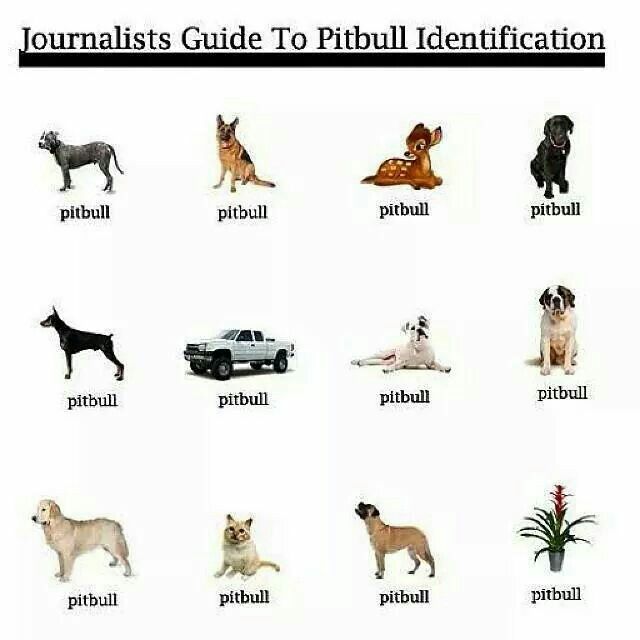
2015-09-09-1441826812-4655468-journalistpitbull.jpg
Dog bite "statistics" are based off of media reports found online where pit bull type attacks are proven to be reported thousands of times more often than dog bite stories involving other breeds. Hardly a scientific, objective, or accurate way to collect information and in fact, there is a proven bias and over reporting when it comes to dogs labeled as pit bulls.
This "google-research" is then taken and compared with media reports involving individual, specific dog breeds. Like, a Labrador Retriever.
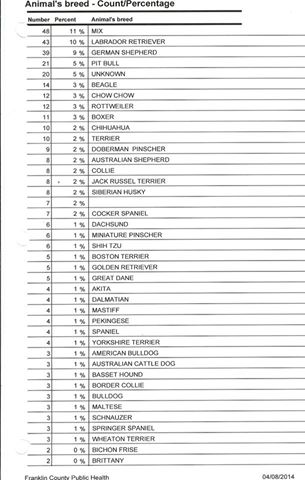
2015-09-09-1441823703-9937606-Reynoldsburg.jpg
(This was obtained from the Franklin County Department of Health in Ohio for the city of Reynoldsburg, which has enforced breed specific legislation against pit bulls for thirteen years)
If we applied this logic elsewhere, the argument would sound something like this:
"Domestic, U.S. made vehicles are unsafe for the public and should be banned because there are more Dodge, Jeep, Ford, Chevy, and Lincoln crashes each year in the U.S. than Honda crashes."--Said by nobody, ever.
Which is why State Farm Insurance, the largest insurance company who collects more data than the U.S. Government and makes policy decisions simply based on risks and underwriting, does not discriminate against this loosely defined group of breeds.
"Decisions are made on a case by case basis for those instances," State Farm spokeswoman Heather Paul told HuffPost. "Pit bulls in particular are often misidentified when a bite incident occurs, so reliable bite statistics related to the dogs' breed are unreliable and serve no purpose."
Neither does the White House, Centers For Disease Control, American Veterinary Medical Association, American Bar Association, ASPCA, American Kennel Club, American Pet Dog Trainers Association, International Association of Animal Behavior Consultants, American Animal Hospital Association, and the list goes on and on...
Now that we know breed specific information is unreliable, what can we look at?
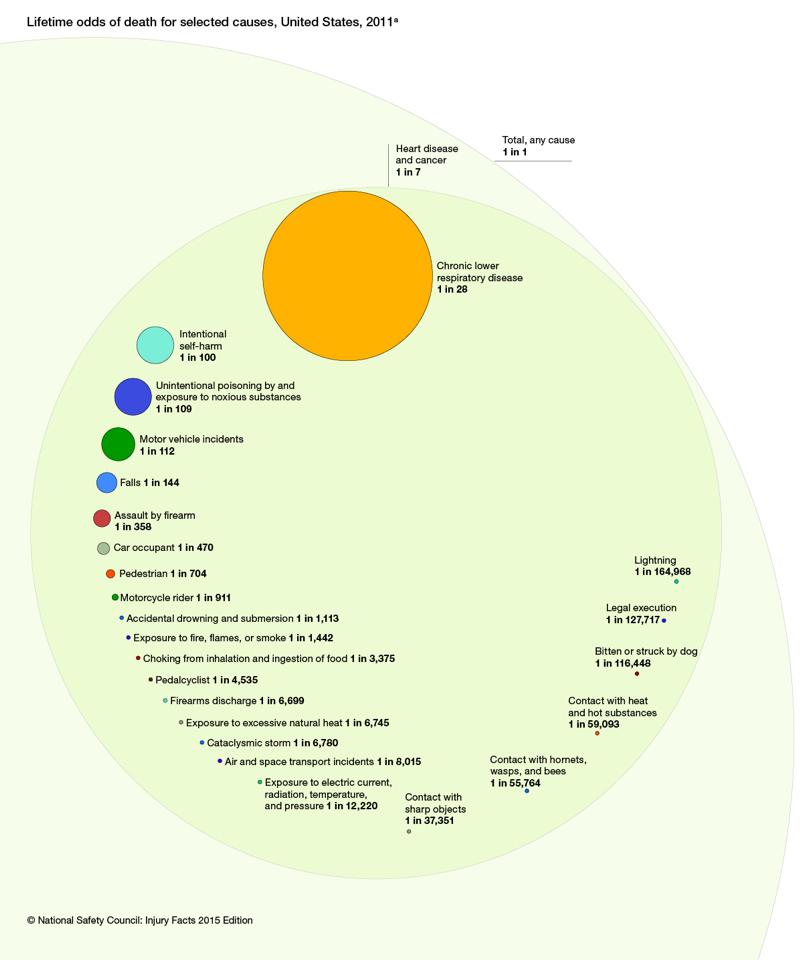
The U.S. National Safety Council has collected data on your likelihood of being killed by a dog of any breed, as well as your likelihood of being killed by other risks.
The data is defined and the parameters are clear.
In 2014, the U.S. National Safety Council showed that your chances of dying by a dog bite are 1 in 116,448. That's just a number though; to put that number into perspective, your chances of dying by legal execution are pretty similar, 1 in 127,717.
You are, in fact, twice as likely to die by a hornet, bee or wasp sting than a dog, 1 in 55,764.
2015-09-09-1441824391-5821965-USSAFETYCOUNCIL.jpg
Maybe more striking is the fact that you are FAR more likely to die from eating a hot dog (choking from inhalation of food) than from being attacked by an actual dog.
Death by a real dog- 1 in 116,448.
Death by a hot dog- 1 in 3,375. 
According to the CDC, only 1.8% of all dog bites treated in Emergency Departments result in hospitalization. When a dog attacks, a child between 5-9 is statistically most likely to be bitten. As a parent, I can only imagine the horror of feeling helpless while your child is being attacked or bitten.
When a pit bull type dog is involved in a bite incident, it is instantly used as a way to drive traffic to websites as the comments section is flooded with people screaming and yelling why all pit bulls are good or why all pit bulls are bad.
In the midst of the mudslinging, we miss the critical opportunity to educate children on dog bite prevention, to advocate for effective dangerous dog ordinances that are breed neutral but give animal control officers the tools to do their jobs and keep communities safe, and to provide spay/neuter assistance and education to the public.The three main suggestions the Centers For Disease Control and others offer to reduce dog bites and create safer communities.
We will never live in a world without dog bites or risks, nor will we ever live in a world without irresponsible people. We can, though, live in a world where dogs are judged as individuals and by their actions rather than their appearance, and owners are held accountable for the actions of their dogs.
2015-09-09-1441825634-2152773-dogsafety2.jpg
(Chesty, teaching a youth-oriented dog bite prevention class with me)
2015-09-09-1441825230-887124-BellesProgression.jpg
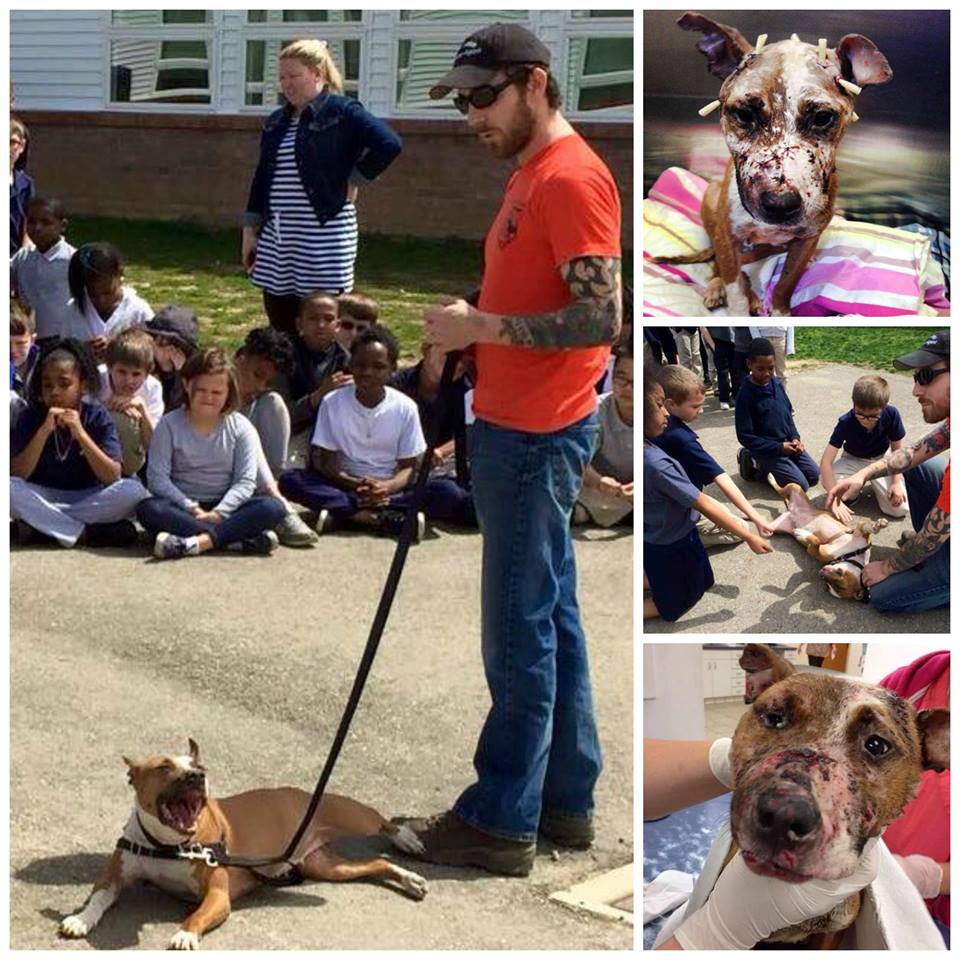
(#bellethebaitdog, rescued from a suspected fighting location to teaching dog safety/bite prevention classes with me)

The First Problem With Banning Pit Bulls is...

The first problem with banning "pit bulls" as a breed is that the term "pit bull" does not refer to a specific breed. It is just a subjective description - a generic term most commonly used to refer to a group of dogs that originate from combining bulldogs with terriers:

Those who aren't involved in rescue or animal welfare on a daily basis often do not have the same insight into this issue that we do.  They hear about tragedies on the news and are scared and horrified, and rightfully so - just as all of us are.  They view pit bull advocates as a bunch of crazies that are protecting monsters that want to gobble up their children.  The knee-jerk reaction is obvious - ban them! Problem solved!  Who could possibly oppose keeping our communities safe?  But what they don't see is that our goal is make our communities safer - for both people and animals.  Humane communities are safe. Safe communities are humane.  We've seen the source of the problem... and it isn't a dog.

There is a lot that we both agree on and ultimately, our goals are the same.  We want our communities to be safe and the people that allow these tragedies to happen to be held accountable   However, our organization and other police and animal control departments that we work closely with every day recognize that a broad based legislation and breed bans are counterproductive.

No one defends animal attacks or bites.  We believe that bite victims should have the same legal recourse and protection under the law, regardless of what breed is responsible for the attack.  We oppose Breed Specific Legislation, because regardless of whether is is a Pit Bull, golden retriever or Chihuaha, we believe all dog owners should be responsible and held liable for the behavior of their animals.  However, we recognize that until people are educated about responsible ownership, humane and anti-dogfighting laws are strengthened, and the police have the power to enforce such laws - nothing will change, regardless of how many breeds are banned.  The dog of choice for nefarious people will just change again as we've seen in the past (In the '70s it was Dobermans, in the '80s it was German shepherds, in the '90s it was Rottweilers. Now it's shifted to Pit Bulls).

So, we'd like to explain what exactly it is that Ambassador Pit Bull Rescue does, and how we approach the issues, in hopes you'll take our views into consideration and understand the far reaching impacts of a breed ban and anti-"pit bull" campaign.  We hope that if all parties can see how much we agree on and work at fighting the problem at the source, we can do MUCH more good together than we would with conflicting campaigns, that ultimately have the same goal in mind.

Why it's impossible to ban "pit bulls"

The first problem with banning "pit bulls" as a breed is that the term "pit bull" does not refer to a specific breed.  It is just a subjective description - a generic term most commonly used to refer to a group of dogs that originate from combining bulldogs with terriers:

  • The American Pit Bull Terrier - recognized by the United Kennel Club (UKC
  • The American Staffordshire Terrier - recognized by the American Kennel Club (AKC)
  • The Staffordshire Bull Terrier - recognized by both the UKC and the AKC
It's basically become a slang term which has come to identify any short, muscular, big headed, short haired dog with cropped, rose, or semi-prick ears.  Other breeds and mixes commonly but incorrectly identified as "Pit Bulls" include American Bulldogs, Bull Terriers, Boxers, Mastiff breeds, and other mixed breed dogs.

Not only does BSL separate families, flood shelters, make excuses for irresponsible owners, and perpetuate a stereotype - it only makes pit bull type dogs that much more appealing to people who get them to try to "look tough".  We pull a lot of the dogs in our program from PG County Animal Shelter (where pit bulls are illegal and can't be adopted out) and what we and the shelter staff have seen is simply a shift to other large breeds and mixes - Mastiffs (Neopolitain MastiffsBull Mastiff), Dogo ArgentinosAmerican BulldogsCane CorsosShar-Peis and Presa Canarios. So, the question is - where do you stop banning?  Do we ban all large breed dogs? All hunting and sport dogs? The other problem with this is that these large, powerful dogs or any mix resembling such are often labeled "pit bull type" dogs.  The average person also can't tell these breeds apart - even when they're purebred.  So, you can see how many dogs get caught up in BSL identification.  These aren't just shelter dogs-- they're dogs that are owned by responsible, everyday families 

Breed Specific Legislation - Why it is ineffective

Any advocate could tell you all day why they chose to work with pit bull type dogs, so we will focus instead on explaining why we vehemently oppose Breed Specific Legislation (BSL).  We could literally write a novel on this subject, particularly with our experience with this issue in PG County and Maryland, so we'll just provide links to information that we hope you'll take a look at and would be happy to discuss any statistics or provide more specific information about pit bull type dogs at a later time.  The HSUS (Humane Society of the United States), does a good job summing up many of the reasons why we believe BSL is not an effective approach to dog bites and dog bite related fatalities HERE.

In 2003,  PG County, Maryland also performed one of the most detailed studies to date on Breed Specific Legislation. They recommended repealing their own ban, citing it as expensive, ineffective, and impossible to enforce. (We have the full text, but easier to read broken out, HERE)

Who Supports Breed Bans?

DogsBite.org is not a valid source - while maybe long ago she may have started with good intentions of advocating for bite victims, her website now simply perpetuates media hype, spreads misinformation, and isn't supported by facts or scientific evidence.

Who Opposes Breed Bans?

Below are a few links to studies, including research by well respected organizations and case studies on municipalities that have enacted BSL and the outcomes:

A Community Approach to Dog Bite Prevention
American Veterinary Medical Association - Task Force on Canine Aggression and Human-Canine Interactions

Breed Specific Legislation E-Book
Animal Farm Foundation

Dog Bite Related Fatalities 2012/2011/2010/2009 Reports
The National Canine Research Council

Dog Bites: Problems and Solutions - A Dog Bites Policy Paper
Animals and Society Institute

The Pit Bull Placebo - Media, Myths, and Politics of Canine Aggression
Karen Delise

Press Release Following "Rufus" Best in Show Win
The American Kennel Club (AKC)

A Comparison of Visual and DNA Identification of Breeds of Dogs
Victoria Voith PhD, DVM, DACVB

The Role of Breed in Dog Bite and Risk Prevention
Journal of the American Veterinary Medical Association

Pit Bull Identification Study 
Maddie’s Shelter Medicine Program, College of Veterinary Medicine at the University of Florida

Every well-respected national organization that is involved in canine/human interactions is opposed to laws targeting specific breeds of dogs. A partial list of these organizations (with links to their position statements) include:

American Bar Association (ABA)

American Dog Owners Association

American Humane

American Kennel Club (AKC)

American Society for the Prevention of Cruelty to Animals (ASPCA)

American Veterinary Medical Association  (AVMA)

Association of Pet Dog Trainers

Best Friends Animal Society

Center for Disease Control

Humane Society of the United States (HSUS)

International Association of Animal Behavior Consultants

International Association of Canine Professionals

National Animal Control Association

National Animal Interest Alliance

National  Association of Dog Obedience Instructors

National Canine Research Council

United Kennel Club

The White House and Obama Administration

The list goes on.....

Here are a few more articles you might want to read (many hosted by NCRC): 

Breed-Specific Legislation FAQ
Breed-Specific Legislation Fiscal Impact Calculator
Dog Breed Specific Regulation by Jane R. Berkey
AVMA-CDC Statements on Breed-Specific Legislation
New Study Explains Why BSL Does Not Reduce Dog Bites
Banned Breeds Are No More Aggressive Than Others, New Study Finds
Denver: Selective Counting and the Cost to Dogs and People
Miami-Dade County: No Positive Results
Miami-Dade "pit bull" ban remains, despite overwhelming evidence of failure and county officials' view 
Sioux City Breed Ban Misses the Mark
World-Wide Failure of Breed-Specific Legislation
How Data Can Spare Dogs and Reduce Dog Bites by Dr. Karen Overall, Center for Neurobiology and Behavior, Psychiatry Department – Penn Med
Speak! or Rollover! The Choice Dog Owners Need to Make, by Karen Delise, American Dog Magazine (2009).
Aggression and Dogs: No significant difference found between breeds
"Pit bull" regulation not a basis for Dog Bite Prevention, AVMA experts report
Maryland's Experience: the Public Record & the Tracey v Solesky Ruling
Winnipeg, Manitoba far behind Calgary in community safety
American Bar Association (ABA) Urges Repeal of All Breed-Specific Laws

So What Works?

Responsible pet ownership and clear, enforceable laws  --- which is what Ambassador Pit Bull Rescue, pit bull advocates, and our partners aim to achieve.

The basic building blocks of a responsible pet ownership community should include:

1. License and provide permanent identification for pets.
2. Mandatory spay or neuter pets (unless a prevented by a health condition).
3. Provide training, socialization, proper diet and medical care for pets.
4. Do not allow pets to become a threat or nuisance in the community.
5. Procure pets ethically and from a credible source.

Calgary, Alberta has had great success as a model responsible pet ownership community.
Interview on why they adopted this policy and results: http://vimeo.com/26979893

Humane education is critical and often overlooked as well.  When people are raised a certain way -taken to dogfights as kids or their parents mistreated their animals - it perpetuates irresponsibility and a lack of empathy for people and animals. Sometimes they really don't understand that what they're doing is wrong.  People that abuse animals are 5 times more likely to commit violent crimes against people - Dogfighting isn't a dog problem, it's a community problem.  It brings drugs, gambling, weapons and sex crimes into our communities.

Adopt. Educate. Facilitate. Enforce.

On a daily basis we work closely with members of the community, local legislators, police departments, and shelters performing behavioral evaluations, providing input at round table discussions, and helping them develop best practices - So we not only have extensive experience with this issue, but behavioral testing, humane education, community outreach/support, and we have seen first-hand the repercussions on families and communities that breed bans have and how ineffective they are at combating the problem.

There is a HUGE problem which reaches far beyond the few articles you googled- and it's not a breed of dog (or dogs that share physical characteristics) that are to blame.  A ban does not reach the source of the problem, because it doesn't identify the problem. Hopefully, the information that we have provided is useful and we can find a way to work together towards safer communities instead of at odds.